Ancient Greek as a living language. From the very first class.
Learn Ancient Greek the natural way, through private lessons and group courses, plus free videos, audiobooks, and vocabulary. From a Polis Institute instructor with a background in languages from Latin to Classical Chinese.
Graduate of the Polis Institute’s 2-year Fluency in Ancient Greek program
Specializing in Attic prose, with teaching across Homer, Koine, and more
Background in six languages, from Classical Chinese to Latin
Teaching Philosophy
Not a puzzle to decode, but a language to live in.
Language Starts With Life
Traditional Ancient Greek courses have a strange narrowness to them. Students memorize paradigms, learn philosophical terminology, read about wars and politics. But when asked to describe what’s right in front of them, they struggle. The cup of coffee getting cold, the window to the left, the weather outside, objects they see every day, appear as if non-existent. I start from the opposite principle: language acquisition begins with the living appeal of the language, with direct reference to things the learner feels are natural and familiar. This is how we all learned our first language, and it works for Ancient Greek too.
Full, Ready, and Accurate
To paraphrase an old saying: reading makes you full, speaking makes you ready, writing makes you accurate. Traditional Ancient Greek teaching focuses heavily on accuracy, and accuracy matters. But without the other two, students can parse every verb form and still struggle to read a page of Plato with any fluency. They don’t learn the language, just learn everything about it, and rarely reach a point where they can read Ancient Greek for pleasure outside of school. I want my students to be full, ready, and accurate. That means speaking and hearing Ancient Greek from the start, not instead of reading and writing, but as the foundation that makes reading and writing stick.
Colloquial by Nature
One often overlooked aspect is that Ancient Greek, more so than Latin, is especially suited for such a colloquial approach. The colloquial form of Ancient Greek is what the greatest Ancient Greek authors actually used. It’s how Socrates talked, how Plato wrote, how Aristophanes got his laughs. The everyday conversational style isn’t a stepping stone to “real” Ancient Greek. It is real Ancient Greek. By speaking Ancient Greek, we give prominence to precisely the element that is most characteristic of the language we know from literature. My teaching method presents the language in its most natural form.
Core Principles
How to Learn Ancient Greek With Me
Free content on every platform, private lessons, and group courses. Still undecided? Have a look at my getting started guide.
No Course Open
All My Courses
Hear Ancient Greek Spoken
A sample of the videos I post on YouTube, all spoken in Ancient Greek.
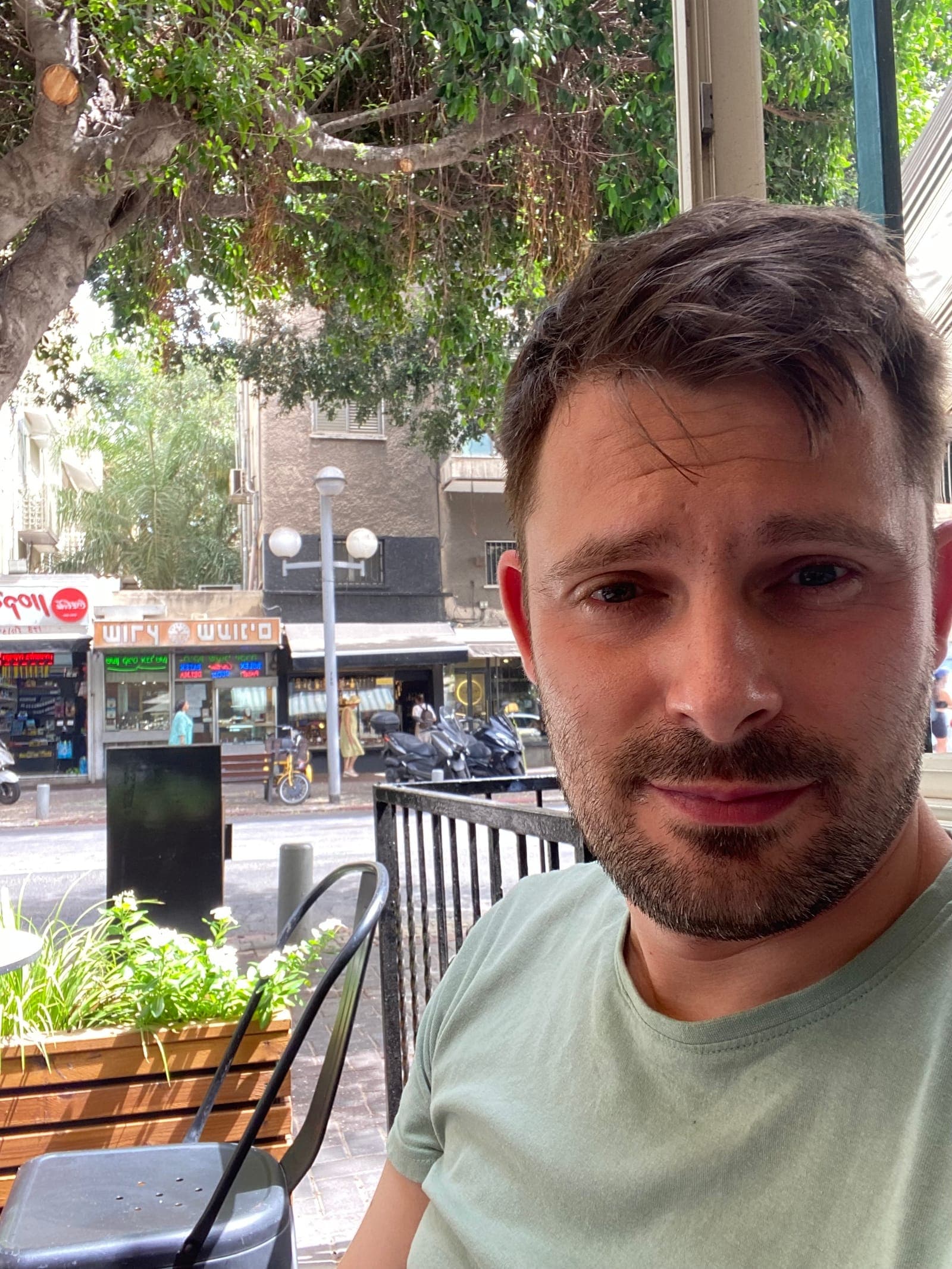
About Me
From Latin to Classical Chinese to Ancient Greek.
My name is Maciek (pronounced MAH-chek), or Ματθίᾱς in Ancient Greek. I grew up in Syria, Poland, and the United States. In high school I studied Spanish, French, and Japanese, and taught myself Latin on the side. I went on to study history at the University of Nottingham and McGill University, and then to Beijing, where two years at Tsinghua University took my Mandarin through the highest level the university teaches, alongside Classical Chinese.
That background in languages and language acquisition led me to classical philology at the University of Warsaw, and then to the Polis Institute in Jerusalem for their 2-year Fluency in Ancient Greek program, where I also completed the Emphasis in Teaching Ancient Languages track. Now I teach Ancient Greek as a living language at the Polis Institute and Institutum Antiquitatis, create content in Ancient Greek across multiple platforms, and bring what I’ve learned from years of studying and teaching languages to every lesson.